
Uganda vs Rwanda Gorilla Trekking
August 26, 2025
Best time of the year for Gorilla Trekking
August 27, 2025
Mistakes to avoid while Gorilla Trekking, Trekking into the misty rainforests to observe mountain gorillas in the wild is one of the most humbling and awe-inspiring experiences on Earth. But it’s also a physically and ethically sensitive activity that demands preparation, respect, and awareness.
Whether you’re heading to Uganda’s Bwindi Impenetrable Forest, Rwanda’s Volcanoes National Park, or the Virunga Mountains in the DRC, your gorilla trek will be infinitely more enjoyable (and responsible) if you avoid the most common mistakes travelers make.
Here’s your ultimate guide to what NOT to do while gorilla trekking—so you can maximize the experience while protecting these critically endangered primates and yourself.
1.Underestimating the Physical Demand – mistakes to avoid while Gorilla Trekking
Mistake: mistakes to avoid while Gorilla Trekking
Assuming gorilla trekking is a light, leisurely nature walk suitable for any fitness level.
Reality: mistakes to avoid while Gorilla Trekking
While the idea of trekking through lush forests to see gorillas sounds serene, the actual hike can be challenging, unpredictable, and physically demanding — especially in certain regions like Uganda’s Bwindi Impenetrable Forest, where the terrain truly lives up to its name.
Here’s why:
-
Variable Trek Duration: You might reach the gorillas in 1 hour… or not until 6+ hours later. There’s no guarantee — it depends on where the gorilla family has moved that day.
-
Unpredictable Terrain: Expect steep hills, thick undergrowth, slippery mud, fallen trees, stinging nettles, and narrow animal paths. You could be hiking up to altitudes of 2,500 meters (8,200+ ft).
-
Weather Can Shift Quickly: Even during dry season, a sudden tropical downpour can turn trails into mudslides.
-
Bwindi vs. Volcanoes:
-
Bwindi (Uganda): Dense, tangled jungle with steep ascents and no marked trails — the guide may cut a new path with a machete.
-
Volcanoes NP (Rwanda): Better-maintained trails, but higher elevation and potential altitude fatigue.
-
Mgahinga (Uganda): Similar to Volcanoes NP, but less frequented and slightly less rugged.
-
Bottom line: Even if you’re lucky and spot gorillas quickly, the journey there and back is often strenuous.
Avoid It By:
Training Before Your Trip – mistakes to avoid while Gorilla Trekking
A little prep goes a long way. Begin 4–6 weeks before your trek:
-
Cardio: Walking, hiking, swimming, or jogging to build endurance.
-
Leg strength: Squats, lunges, and stair climbing to handle inclines.
-
Balance & agility: Practice walking on uneven surfaces if possible.
-
Hiking practice: Carry a daypack on uneven trails to simulate real conditions.
If you have any health concerns (asthma, heart conditions, joint issues), consult your doctor beforehand. Gorilla trekking may not be suitable for all fitness levels.
Wearing the Right Gear – mistakes to avoid while Gorilla Trekking
Being dressed properly will reduce fatigue and help prevent injury:
-
Sturdy, waterproof hiking boots with good ankle support and grip
-
Lightweight moisture-wicking clothes (long sleeves and pants for protection)
-
Trekking gloves to grip vines or branches
-
Gaiters or long socks to block mud and insects
-
Rain jacket or poncho, even in dry season
-
Hat and breathable layers for sun protection
See our full packing list in mistake #3 for gear tips.
Hiring a Porter (Highly Recommended) – mistakes to avoid while Gorilla Trekking
Even if you’re fit, a porter is incredibly helpful:
-
They’ll carry your backpack and camera gear
-
They assist you on steep or slippery parts of the trail
-
You’ll conserve energy for the actual gorilla encounter
Cost: ~$15–$20 USD per trek — small investment for big help, and directly benefits local communities.
Pacing Yourself During the Trek – mistakes to avoid while Gorilla Trekking
-
Drink plenty of water, take small sips often.
-
Don’t try to rush; the trek isn’t a race. Guides will adjust pace as needed.
-
Let the guide know if you need breaks — it’s completely normal.
2.Booking Too Late (or Not Booking at All)
Mistake:
Waiting until the last minute to book your gorilla trekking permit, assuming you can get one on arrival or a few days before the trek.
Reality:
Gorilla trekking is one of the most tightly regulated wildlife activities in the world, and for good reason. Each gorilla family can only be visited by one group of eight people per day, to minimize stress, disease exposure, and habitat disruption.
Here’s how it breaks down:
-
Uganda (Bwindi & Mgahinga): Approximately 152 permits are available per day.
-
Rwanda (Volcanoes National Park): Roughly 96 permits are issued daily.
-
DRC (Virunga): Even fewer permits due to ongoing instability and conservation limitations.
These quotas fill up months in advance, particularly during high seasons:
-
Dry season: June–September
-
Holiday period: December–February
-
Other peak times: Easter holidays, long weekends, and international school breaks
If you wait until the last minute, you’re likely to:
-
Miss out entirely
-
Be forced to reschedule your itinerary
-
Pay premium rates for last-minute permits (if any are left)
-
Be unable to choose your preferred trekking region or lodge
Avoid It By:
Booking Your Permit 3–6 Months in Advance
Especially if you’re traveling during the dry season or around holidays. Some travelers book up to a year in advance to secure their ideal date, trekking sector, and lodge combination—especially in Uganda’s Bwindi, where there are four separate sectors.
Going Through a Reputable Tour Operator or Safari Company
Tour operators:
-
Know which permits are available and in which sectors.
-
Handle the paperwork and secure your permit on your behalf.
-
Coordinate transport, accommodation, and porters.
-
Can even provide last-minute solutions through their networks if someone cancels.
Some companies bundle permits into full trekking packages, which may also include:
-
Park entrance fees
-
Airport transfers
-
Lodge bookings
-
Cultural add-ons (e.g., Batwa community visits or chimpanzee trekking)
Tip: If you want to book permits yourself (e.g., in Uganda), it’s possible through the Uganda Wildlife Authority (UWA). But it requires multiple steps, including payment via bank transfer and coordination with UWA offices. Going through a local tour operator is much easier.
3. Wearing the Wrong Clothes and Shoes
Mistake: Trekking in jeans, white sneakers, or short-sleeve tops.
Reality: You’ll face muddy trails, stinging nettles, biting insects, and unpredictable rain.
Avoid It By Packing:
-
Lightweight, moisture-wicking long-sleeve shirts and long pants
-
Waterproof hiking boots with good grip
-
Gaiters or long socks (to keep ants and mud out)
-
A rain jacket or poncho
-
Gardening gloves for holding onto thorny vegetation
-
Neutral or dark colors (bright colors can disturb wildlife)
4. Ignoring Health and Safety Rules – mistakes to avoid while Gorilla Trekking
Mistake: Hiding cold or flu symptoms to avoid being turned away.
Reality: Gorillas share about 98% of our DNA and are extremely vulnerable to human-transmitted illnesses. A common cold could be deadly for a gorilla troop.
Avoid It By:
-
Being honest about your health — you’ll be turned away if you’re sick, but for good reason.
-
Staying at least 7 meters (23 feet) away from the gorillas (or more if they have infants).
-
Avoiding loud noises, sudden movements, and flash photography.
-
Wearing a mask if required by park authorities.
5. Disregarding Group Etiquette and Ranger Instructions
Mistake: Straying from the group or crowding the gorillas for a better photo.
Reality: Park rangers are there to ensure both your safety and the gorillas’ welfare. Breaking protocol can endanger everyone.
Avoid It By:
-
Always following ranger directions — they know the gorillas’ behaviors and boundaries.
-
Walking slowly and quietly during the encounter.
-
Keeping your voice low and camera sound off.
6. Expecting a Luxury Experience in the Jungle
Mistake: Thinking the trek will be neatly packaged like a zoo visit or safari drive.
Reality: Gorillas are wild animals, and their location isn’t guaranteed. You may trek through tough terrain and only get 60 minutes with the gorillas once found.
Avoid It By:
-
Adjusting your expectations — this is about connection with nature, not convenience.
-
Appreciating the trek as part of the adventure.
-
Embracing the unpredictability — it’s what makes the moment magical.
7. Overpacking (or Underpacking) – mistakes to avoid while Gorilla Trekking
Mistake: Carrying too much gear (or forgetting essentials).
Reality: You’ll need to be light, agile, and prepared.
Avoid It By Bringing:
Essentials:
-
1–2 liters of water
-
High-energy snacks (like granola bars)
-
A small daypack with rain cover
-
Camera (no flash!)
-
Sunscreen and insect repellent
Leave Behind:
-
Drones (strictly prohibited)
-
Big tripods (bulky and intrusive)
-
Non-biodegradable packaging
8.Never Try to Touch or Feed the Gorillas — mistakes to avoid while Gorilla Trekking
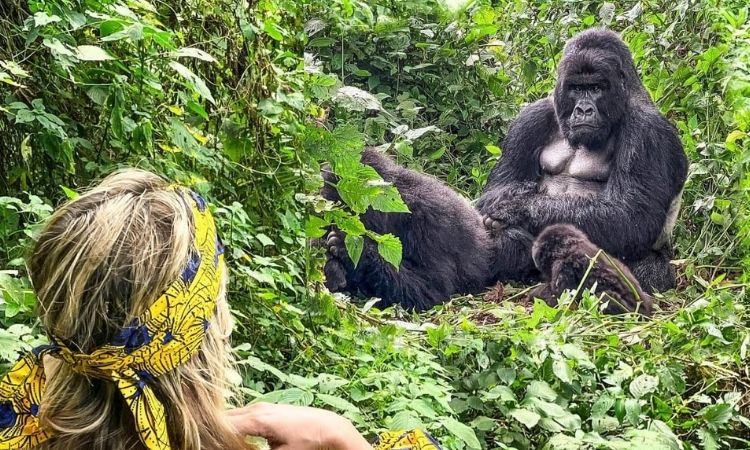
Gorilla trekking is one of the most extraordinary wildlife encounters on Earth. Coming face-to-face with a wild mountain gorilla — seeing the wisdom in their eyes, hearing their breath, watching them care for their young — is deeply moving. But this close contact comes with great responsibility.
Among the most dangerous and disrespectful mistakes you can make on a trek is trying to touch or feed a gorilla.
Here’s why this seemingly innocent act is strictly forbidden, and how you can avoid making a costly or even life-threatening error.
Mistake: Reaching Out to Touch or Offering Food
Some travelers — swept up in the magic of the moment — make the mistake of trying to interact physically with a gorilla. It may seem like a gesture of affection, curiosity, or even fun, but in the world of gorilla trekking, this is a major violation of both safety and conservation ethics.
Touching or feeding a gorilla:
-
Breaks wildlife protection protocols
-
Endangers both human and gorilla
-
Undermines decades of conservation work
1. Health Risks – You Could Kill a Gorilla Without Knowing It
Mountain gorillas share approximately 98.4% of their DNA with humans, which makes them extremely susceptible to human diseases. A mild human cold, cough, or flu can devastate a gorilla troop with no immunity to human pathogens.
Even indirect contact (like touching a branch the gorilla later touches) can transmit viruses or bacteria.
➡️ Feeding also disrupts their natural diet and can cause:
-
Digestive issues
-
Dependency on human food
-
Aggression toward future visitors expecting food
2. Gorillas Are Wild, Unpredictable Animals
Despite their gentle demeanor, gorillas — especially silverbacks — are immensely strong and protective of their families.
If a gorilla feels threatened:
-
They may charge, slap the ground, or roar.
-
You could be knocked down or injured.
-
Even playful curiosity from a gorilla can unintentionally cause harm.
Guides are trained to read gorilla behavior and know how to diffuse tension. But if you break the rules and attempt to touch, you remove their ability to protect you.
3. You Risk the Shutdown of Gorilla Tourism
Conservation organizations and governments tightly regulate gorilla trekking to ensure it doesn’t harm the species. Any incident that endangers the gorillas or makes them feel threatened could lead to:
-
Permits being revoked or restricted
-
Entire trekking routes being closed
-
Local community members losing jobs and income
Your actions don’t just affect you — they affect conservation efforts and local livelihoods.
Avoid It By:
1. Keeping Your Distance – No Matter What
The minimum required distance from a gorilla is 7 meters (23 feet). Sometimes gorillas may come closer on their own — especially curious juveniles — but you must not move toward them or reach out.
➡️ If a gorilla approaches you:
-
Stay still
-
Look down (avoid direct eye contact)
-
Follow your guide’s instructions
-
Do not raise your hands or camera toward the animal
This behavior shows submission and reduces the chance of provoking a defensive response.
2. Never Bring or Offer Food
Bringing food into the trekking zone is generally prohibited. Eating near gorillas is strictly forbidden, even if it’s just a granola bar in your bag.
-
Avoid food wrappers or packaging in your backpack.
-
Do not give snacks to porters or guides in the forest — wait until after the trek.
The gorillas must never associate humans with food. Doing so can change their behavior permanently, increasing conflict and dependency.
3. Following Guide Instructions — Always
Your ranger guide and trackers are there not only to locate gorilla families but to keep you and the gorillas safe. Their word is law in the forest.
-
Don’t move unless told
-
Don’t whisper questions during close contact — wait until it’s safe
-
Don’t try to take “the perfect selfie” that involves getting closer than the group
Remember: your presence is a privilege, not a right.
Ethical Trekking = Conservation in Action
Respecting boundaries protects gorillas and ensures future travelers can experience the same magic. When you follow the rules:
-
You help protect an endangered species
-
You respect the work of rangers, scientists, and local communities
-
You create a memory that’s both meaningful and responsible
9. Skipping the Cultural Context
Mistake: Treating gorilla trekking as a bucket-list item without learning about the local communities.
Reality: Conservation doesn’t happen in a vacuum. Local people are essential stewards of these ecosystems.
Avoid It By:
-
Visiting nearby villages or cultural centers (like the Batwa community in Uganda).
-
Supporting local crafts, guides, and porters.
-
Choosing lodges that contribute to conservation and community development.
10. Not Understanding the Importance of Permits
Mistake: Complaining about the high cost of gorilla trekking permits.
Reality: Permit fees directly fund gorilla conservation and community programs that help protect these endangered animals.
Avoid It By:
-
Viewing the permit cost as a conservation investment, not just a ticket.
-
Learning how your visit contributes to anti-poaching efforts and sustainable tourism.
Bonus Tip: Don’t Just “See” — Connect
The ultimate mistake is rushing through the trek just to get a photo or check off an experience. These are intelligent, emotional beings with family bonds and social structures. Observing them in the wild is a rare privilege.
Slow down. Be present. Let the moment sink in.
Final Thoughts
Gorilla trekking is not a walk in the park — it’s a journey into the heart of the wild, both physically and emotionally. By avoiding these common mistakes, you’ll ensure a safe, respectful, and truly unforgettable experience for both yourself and the mountain gorillas.
Travel responsibly, trek mindfully, and leave nothing but awe behind